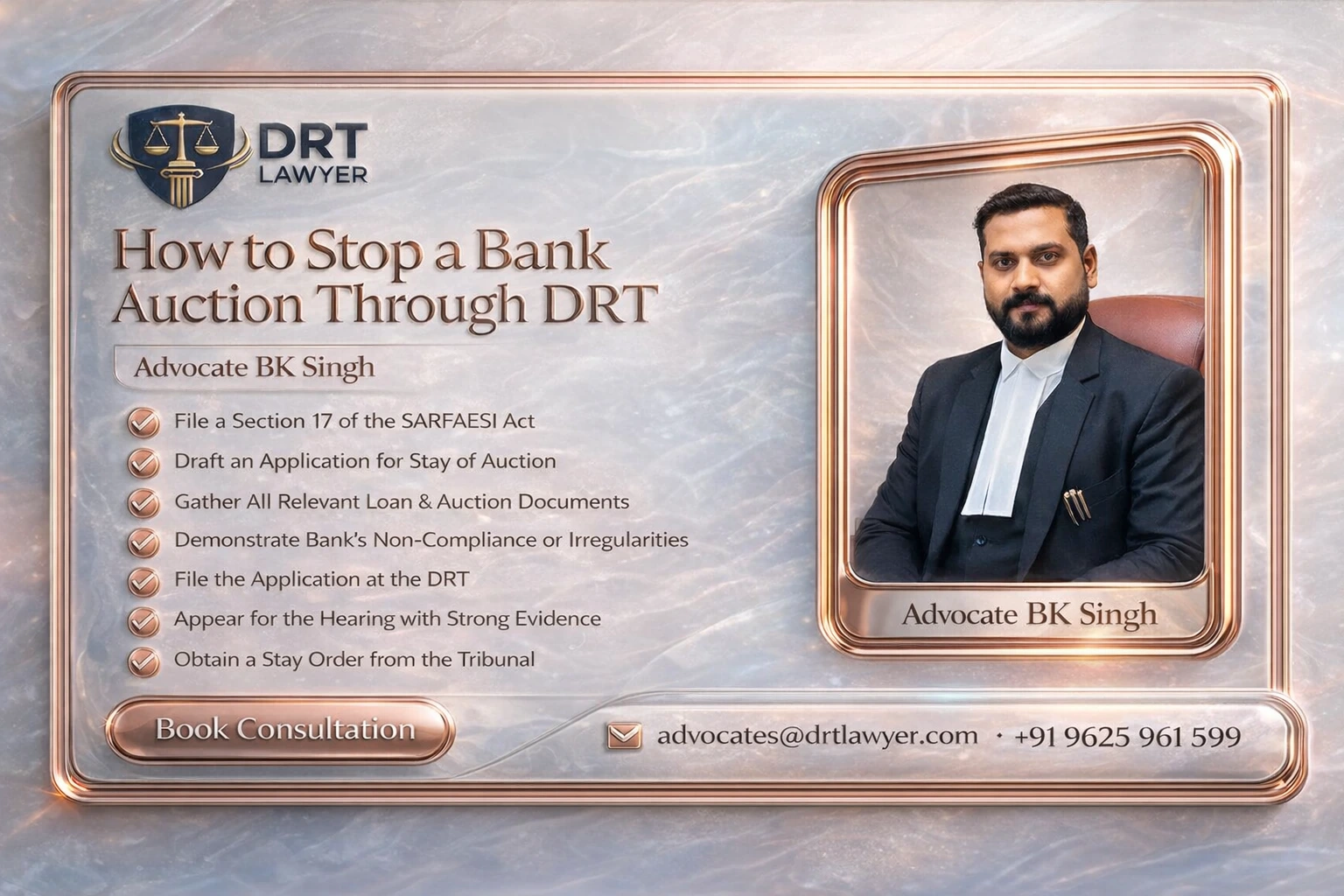
How to Stop a Bank Auction Through DRT
Most borrowers think that everything is over when a bank starts the auction process on a house, shop, factory unit, or any other property that is already mortgaged. In a lot of cases, that's not true. Indian law lets borrowers go to the Debt Recovery Tribunal, or DRT, to fight unfair or rushed recovery actions. The bank usually sends a demand notice, waits for the legal period, and then moves toward possession and auction. However, the borrower can still question whether the bank followed the law, gave valid notice, valued the property fairly, and acted within the law before taking such a serious step.
A bank auction isn't just about money for middle-class families and small business owners. It has an effect on home security, business continuity, mental peace, and years of hard work. That's why it's so important to act quickly before DRT. A well-prepared DRT case can ask for immediate relief from the auction, point out mistakes in the bank's process, and make room for a settlement, restructuring, or legal correction of the recovery action. When borrowers need help right away, DRT Lawyer and Advocate BK Singh handles these kinds of cases with a practical focus on documents, timing, and clear legal steps.
1. What does "bank auction" mean in the sarfaesi law?
Under the SARFAESI law, a bank auction usually starts when a loan account is considered to be in default and the secured creditor starts to take back the property that was used as collateral. In short, the bank tries to get back what it is owed by taking action against the secured asset, which could be a house, business unit, land, shop, warehouse, or factory property. At this point, borrowers usually start looking for help by typing in phrases like "how to stop bank auction," "bank auction stay," and "how to challenge bank property sale."
In real life, an auction is not the first step. It comes after a series of warnings and actions. Before selling a piece of real estate, the bank needs to follow the rules for notice, valuation, reserve price, and publication. If the bank skips steps, undervalues the property, rushes the sale, or does something without giving the borrower a fair chance, the borrower may have a strong case to go to DRT. A lot of people think that an auction means there is no legal way out, but that is often based on fear rather than the law.
2. When you can go to DRT to stop the auction
A borrower can move DRT after the bank takes steps to get back the secured asset that directly affect it. In these situations, timing is very important because waiting can make it less likely that you will get urgent help. Many borrowers waste valuable time going to the bank, making informal requests, and calling officials over and over again as the auction date gets closer. By the time they get legal help, the situation has already gotten very bad.
In real life, people usually talk to a lawyer after they get a notice of possession, a notice of sale, or an e-auction publication. A family may suddenly find out that their home is up for auction, or a small business owner may find out that their shop or industrial unit is being prepared for sale at a low reserve price. At this point, DRT Lawyer and BK Singh Advocate can look over the notices, payment history, objections, valuation issues, and communication with the bank to see if they can get urgent help before the auction goes ahead.
3. Common reasons to challenge a bank auction before DRT
Just because a loan has gone into default doesn't mean that every bank auction is legal. One common reason for a challenge is a faulty notice. If the borrower didn't get the right notice, if the bank didn't fairly consider objections, or if the legal process was done carelessly or mechanically, these issues could become important before DRT. Banks are expected to follow the rules, and borrowers have the right to question recovery steps that don't follow the rules or are not fair.
Another big reason is the way the sale works. Borrowers often say that the auction was unfair because the property was undervalued, the reserve price was unfairly set, the sale notice was rushed, or the publication process was flawed. This is a big problem for small business owners because an undervalued sale can wipe out years of work and leave them with an unpaid balance. A proper DRT challenge looks at more than just the default. It also looks at whether the bank acted legally and reasonably while getting ready for the auction.
4. Can DRT really stop the auction or get the property back?
Yes, DRT can look into whether the bank's recovery action was legal and step in if the process is unfair or broken. The Tribunal can protect the borrower's rights by making the right orders if it finds that the bank did something wrong. In the right case, DRT can stop the auction, question the legality of what has already been done, and give orders that help make things fair again. This is why people who are borrowing money shouldn't think that nothing can be done once the sale notice is sent out.
At the same time, DRT relief is very dependent on the facts, the paperwork, and how quickly the filing is done. A borrower who comes with all their paperwork, clear reasons, and a timely legal strategy is in a much better position than someone who just says the bank is being mean. BK Singh Advocate sees these issues as urgent and based on documents. That means that every notice, objection, account statement, valuation issue, and communication with the bank is carefully looked at to create a strong and realistic challenge.
5. documents and planning needed for quick DRT relief
The right paperwork is usually the first step in a strong DRT case. The borrower should get together all of their loan approval papers, mortgage documents, account statements, demand notices, possession notices, sale notices, communications with the bank, proof of payments, copies of objections that have already been sent, and any settlement proposals or email records. Many cases fall apart because the borrower doesn't have all the paperwork they need and can't show the whole picture when they need to take legal action right away.
Extra records are often very helpful for small businesses. Business owners should keep GST papers, stock details, records of money owed, cash flow information, and any other papers that show the business can come back to life if the property isn't sold right away. These papers help show that the borrower isn't trying to get out of their responsibilities; they just want a fair and legal chance. DRT Lawyer focuses on this practical side because legal arguments are more convincing when they are backed up by clear facts and numbers.
6. What happens if the bank doesn't listen to settlement talks and sells too quickly?
While the auction process goes on in the background, many borrowers are still talking to the bank about a one-time settlement or new payment terms. This makes things confusing because borrowers start to think that talking means safety. Talking to branch staff in person does not automatically stop legal recovery. The bank may still move forward with the auction even if they are talking about settling the case on the side, unless there is a clear written development or legal pause in the process.
This is why borrowers should never rely only on verbal promises as the auction date gets closer. If the bank isn't paying attention to real settlement efforts, is moving too quickly, or is acting unfairly even though they are still talking, legal action is needed right away. A good legal team doesn't just rely on hope. It builds pressure through papers, filings, and urgent representation. With this practical attitude, DRT Lawyer and BK Singh Advocate help borrowers turn their confusion into a clear legal response before the sale causes even more harm.
7. The difference between DRT and drat in auction matters
A lot of borrowers mix up DRT and DRAT, but they are not the same thing. DRT is the first place where a borrower usually fights the bank's efforts to get back property that is secured. If someone wants to challenge a decision made by DRT, they can do so in DRAT. This difference is important because a lot of people wrongly think they have to meet strict requirements before they can even go to DRT, which makes them panic and slows things down.
Knowing how to use a forum correctly can save you time and money. The first legal fight against the bank's auction action usually starts before DRT. This is where the immediate facts, notices, valuation issues, and procedural problems are looked at. A different stage starts if the case goes to appeal later. This is why borrowers need clear instructions from the beginning. If you don't plan your response well, it can hurt your case. On the other hand, a well-structured DRT challenge can keep the borrower's options open and make it more likely that the case will be resolved in a useful way.
8. How professional legal help can keep businesses and borrowers safe
It is not very common to stop a bank auction with DRT by filing a normal case with copied language. It takes a lot of work to read notices carefully, check legal deadlines, find procedural errors, look into concerns about valuation and reserve prices, and decide whether the case should focus on urgent stay, settlement protection, procedural illegality, or a mix of these issues. This is when having experience comes in handy, especially when the borrower is under a lot of stress and the auction date is coming up.
When dealing with these kinds of cases, DRT Lawyer and BK Singh Advocate put the client first and use a strategy-based approach. Most of the time, borrowers just want honest answers to their questions. They want to know if the auction can still be contested, what papers are missing, how quickly action must be taken, and what options are still available. Families want to keep their homes from being sold in a hurry, and business owners want to keep their businesses from being sold in a hurry that could ruin their lives. When things seem out of control, careful legal help, quick paperwork, and clear advice can help.
Reviews from Clients
*****
Raghav Malhotra
When the bank started to auction off our property, I was under a lot of stress. BK Singh Advocate made the DRT process easy to understand and helped me see where I could question the bank's actions. I liked how calm they were and how clearly they explained each step without giving me false hope.
*****
Meenal Sareen
We were all very stressed because we thought that the auction meant the issue was already over. The DRT Lawyer carefully looked over our papers, pointed out important things in the bank notices, and told us what we needed to do right away. The help felt useful, polite, and really focused on finding a solution.
*****
Devendra Khatri
I own a small business, and the auction of the secured property would have ruined years of hard work. BK Singh Advocate took the case seriously and made sure everyone understood what was going on. I was given clear advice, a good sense of the case, and a sense of control again.
*****
Sonal Bedi
I liked how the issue was dealt with without any drama or confusion. They went over the papers in great detail, made sure I understood the legal situation, and I never felt like I was being ignored. At a time when everything seemed unclear and rushed, DRT Lawyer showed us a clear way to go.
*****
Karan Talreja
I needed someone who could respond quickly and carefully when the bank recovery process got aggressive. BK Singh Advocate listened carefully, looked over the record, and gave us a useful plan. The advice was fair, clear, and focused on keeping us from making mistakes that could have been avoided.
?FAQs
Q1. Is it possible to stop a bank auction in India using DRT?
Yes, you can often contest what the bank did in front of the DRT if there are legal or procedural problems with the recovery process. The timing, paperwork, and details of your loan and property case will determine how well it goes.
Q2. When should I go to DRT about a bank auction?
You should contact DRT right away if you get serious recovery measures like a sale notice, possession action, or auction publication. If you wait too long, your chances of getting urgent help before the auction date go down.
Q3. Can DRT stop the auction of my house?
Before going to auction, DRT can look into whether the bank followed the right legal steps. If the case is urgent and has a good legal basis, the Tribunal may issue protective orders based on the facts that are presented to it.
Q4. What are the most common reasons to contest a bank auction?
Some common reasons are a faulty notice, an incorrect valuation, a low reserve price, a rushed sale process, unfair handling of borrower objections, and other mistakes the bank made during the recovery process.
Q5. Is it possible for me to contest the bank's set reserve price?
Yes, you can question the reserve price as part of your challenge if it seems unfairly low and hurts you in a big way. This issue becomes important when the value of the property is much higher than what the bank used for the auction.
Q6. Will talking to the bank about a settlement automatically stop the auction?
No, just having talks about a settlement doesn't mean that recovery action will stop. Borrowers need to be careful because banks may keep the auction going unless there is a clear written agreement or legal action.
Q7. Is DRT helpful for small business loan cases?
Yes, DRT is very helpful for small business borrowers when their shop, warehouse, office, factory, or other secured asset is about to be sold at auction. It can give you a legal way to fight unfair recovery actions and get real help.
Q8. What papers do I need to file a DRT case against a bank auction?
You usually need loan papers, account statements, mortgage documents, notices from the bank, proof of payment, letters of objection, communication records, and any other documents that show problems with the process or ongoing settlement efforts.
Q9. Can people who are responsible for an auction also take legal action?
Yes, in some cases, guarantors and other people who are affected may also have legal options if the bank's actions directly affect their rights or interests related to the secured asset.
Q10. Why do I need to get legal help right away in a bank auction case?
This is because bank auction matters are very time-sensitive. If you wait too long, it may be harder to protect the property, fight the sale process, and give DRT the right information before it's too late.
There's no reason for concern. There is no difficult-to-understand legalese.
Someone who has helped many people with the same problems gives you clear, honest advice. We want to make the legal process easy to understand and use for everyone.
Schedule Your Consultation